|
Saf-T-Glove
/ Resource Center
/ Product Guides
/ Glove Selection Guide
/ Glove Materials

Glove Materials
Cotton Canvas Gloves
Cotton canvas has been the basic materials for industrial work gloves for many years. The woven fabric cloth is available in a variety of weights and styles to meet your specific job applications.
• Single palm
• Single palm with PVC dots for added grip and durability
• Double palm
• Chore with nap out
• Hot Mills
This particular glove material meets two important glove requirements. First, the tightly woven fabric forms a barrier against dirt and grime. Secondly, the twill weave provides a strong surface to resist abrasion. The clute pattern and 100% cotton material provide a soft, flexible comfort. These features make the cotton canvas a solid and inexpensive way or protecting your worker’s hands. In comparison to other cotton fabric, cotton canvas work glove will provide you the best overall wear and durability. The glove material is available
Cotton Knit Gloves
Knit materials are the second major category of fabric from which gloves are made. They include three (3) distinct groups of knits: Jersey, lisle and terrycloth. Each type has unique characteristics that will satisfy your specific requirements. They key advantage of cotton knits over cotton canvas is they have more pliability and elasticity. Cotton knit gloves conform to the worker’s hand. Provides a greater sense of touch and dexterity. The close fit increases the insulating capabilities of the glove. They are warmer than a comparable weight woven cotton canvas glove.
Jersey knit gloves stretches to workers had for snug fit. There are four different styles to meet your individual needs. The standard jersey and PVC dot jersey have a clute cut pattern for comfort and knitwrist which keeps grime from getting inside the glove. The PVC dots provide a better grip and abrasion resistance. The fleeced-lined feature full fashion design and driver’s slip-on style for added insulation and comfort. Finally, two-piece reversible pattern provides versatility and economy.
Choose from a several varieties of lisle knit and inspection gloves for critical product protection. Lightweight 100% cotton inspectors have a reversible pattern and no hem. Cotton fabric absorbs hand oil and moisture while preventing fingerprint contamination. The 100% lint-free nylon is made from a thin 40-denier tricot nylon that enhances the fingertip sensitivity and touch. Ambidextrous style will fit either hand. Hems are color-coded for easy identification of the six available sizes. Heavyweight 100% stretch nylon is lint-free. The fourchette style and inset thumb provides a comfortable, snug fit as well as excellent fingertip sensitivity.
Terrycloth gloves are excellent for use around heat and for cut resistance. Terrycloth loops create an insulating barrier, which results in a flexible, durable and economical heat-resistant glove. In addition, the loops roll, twist and protect the knitted fabric below from the cutting action of sharp edge metals. Terrycloth is absorbent and enables the user a better grip when handling oily metal parts.
String Knit Gloves
Automated knitting machine converts cotton or synthetic blend yarn into a finished glove. Their popularity has grown substantially due to their low cost, reversibility and conforming comfort. More importantly, the string knit’s wide variety of yarn and weight choices meets a wide range of application uses. The uncoated string knit glove is ideal for a work glove or as a liner for insulation. The coated string knit have been dipped or coated with a polymer to provide a better grip and increase durability.
Types of Leather
Cow - Cow leather is the most commonly used leather providing excellent abrasion resistance and durability, while not sacrificing comfort.
Pigskin - Pig leather’s soft texture is pliable and comfortable to wear. It has the best breathability due to it's porous texture. Pigskin gloves tend to become softer with use and withstand moisture without stiffening.
Goatskin - Goat leather is one of the strongest and more durable. Its natural softness and pliability minimizes hand fatigue. Goatskin leather is excellent for job tasks requiring sensitive touch.
Deerskin – Deer leather provides excellent abrasion resistance. It is extremely soft and supple providing excellent dexterity.
Cuts of Leather
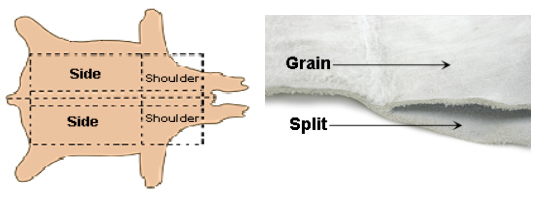
Grain leather is the smooth exterior (hair side) of the hide. Extremely durable with its tightly bonded surface to resist abrasion. Grain is very comfortable to wear and allows greater finger dexterity. Primarily used in making drivers or the more expensive leather palm work gloves.
Split leather is the rougher interior (flesh) side of the animal hide. Saf-T-Glove offers two different types: side or shoulder split. Each has a variety of grades of quality to meet your specific task.
- Side Splits come from the side or rib area of the animal. It is fairly smooth, tight surface area due to its dense fiber structure. This leather section is the most durable and provides the best overall protection.
- Shoulder splits come from the shoulder area of the animal. There is more movement in this region and the fibers tend to be looser. Should splits have an uneven, nappy surface which is less durable yet is more economical than side splits.
Leather Glove Styles
Gunn Cut Leather Palms: Outstanding abrasion resistance, mild heat protection, and cushions hands.
Clute Cut Leather Palms: Economy glove providing leather protection and a comfortable fit.
Drivers: Provide full leather hand protection with dexterity and comfort.
Welders: Provide protection for welding and heat applications.
Mig/Tig Welders: Provide great sensitivity and touch in low heat applications.
Coated Work Gloves
The purpose of coating a cotton fabric is to prolong the life of the material by increasing its abrasion resistance. A coated glove will offer better protection from workplace hazards and improve your worker’s efficiency. One of the first coated fabrics was a PCV dotted fabric. Over the years, the coated work glove group has grown into a major glove category. Today, a woven or knit fabric can be coated with a variety of compounds, like vinyl (PVC), nitrile (NBR) or rubber (latex) to name a few. Both the weight of the fabric and the amount of coating will vary offering many styles to choose from for your individual needs. The end result provides many desirable characteristics. It has a greater barrier to grime, has substantial resistance to abrasion , liquid repellent (not for chemical-resistance) and can be laundered without shrinkage.
Chemical Resistant Gloves
Basic chemical resistant glove are produced in two different styles: unsupported and supported dipped gloves. Unsupported dipped provide outstanding dexterity, sensitivity, flexibility and elasticity. The degree of dexterity and protection will depend upon the gauge or mil-thickness of a glove (5-30 mil). A thin gauge allows a sense of touch and a heavy gauge provides greater protection and durability. This style is used mild chemical applications or as a disposable glove solution. The unsupported glove is available in the following polymers: latex, neoprene, neoprene blends, nitrile, polyethylene and vinyl.
Supported dipped gloves provide tough, heavy-duty protection from your work place hazards. A jersey or cotton interlock knit shell is dipped into a PVC, neoprene or nitrile polymer. This absorbent liner insulates, cushions and absorbs perspiration for extended wear and comfort. Supported dipped gloves feature single-dip or multi-dip styles with a variety of weight choices to select: lightweight, mediumweight and heavyweight. The work applications determine which glove option is the best choice for your hand protection needs.
Continue to Glove Selection Guide
|


